


Baby Bathrobes - Capes Shopping Guide
Baby bathrobes and hooded towels are some of the most beloved and useful accessories for a baby. After bath time, a bathrobe doesn't just offer comfort and warmth; it also helps absorb moisture, protecting the baby's sensitive skin from the cold. However, choosing the right bathrobe requires care and thought. From materials and dimensions to designs and types, there are many factors that determine if a bathrobe will be ideal for your baby.
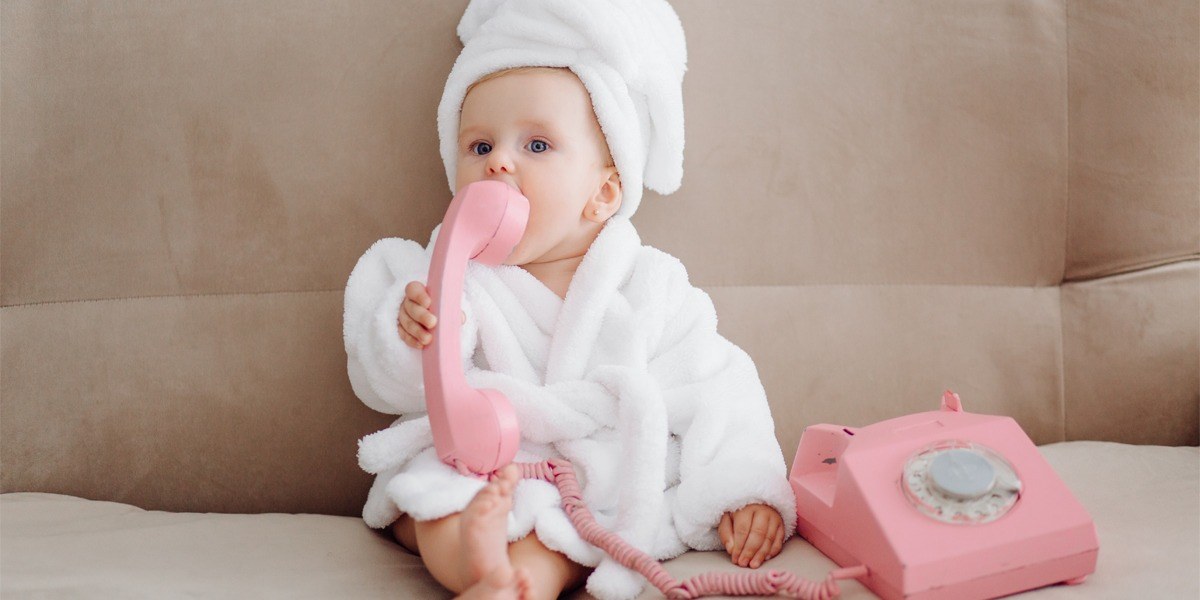
Step 1: Choose the size of the baby bathrobe or hooded towel:
Choosing the right size for baby bathrobes, hooded towels, or ponchos is critical for your baby's comfort and safety. Clothing that is too small or too large can cause discomfort or even accidents. Here are some guidelines for choosing the right size based on your child's age:
Size 0-1 Year:
This size is ideal for newborns or babies in their first year. Usually, hooded towels (capes) are the best choice, as they offer comfort and safety for small babies while being ergonomic for new parents. Most hooded towels feature a hood that covers the baby's head quickly and easily, ensuring the baby stays warm and water is absorbed from their hair fast without causing distress.
Size 0-2 Years:
For this age range, bathrobes, hooded towels, and ponchos are all ideal, depending on what best serves the baby and the parents. Bathrobes and capes in this size are more versatile and can be worn for a longer period. They feature hoods for better ergonomics, while bathrobes come with a belt and sometimes pockets for total comfort. Ponchos are also an ideal choice for this age as they are put on with a single movement and ensure total freedom of movement for the child.
Size 2-4 Years:
This size is for toddlers who have grown and need more room to move. At this age, children have usually developed more mobility and may want to use the bathrobe or poncho themselves with greater independence.
Size 4-6 Years:
This size is ideal for older children who are becoming more independent and can use the bathrobe on their own. This size should offer them enough space to wear it comfortably while providing good coverage and protection.
Step 2: Choose the type of baby bathrobe:
Choosing the type of baby bathrobe, hooded towel, or poncho depends on your personal preferences, the baby's needs, and practicality. Each type has its own advantages, and the most suitable one for you may vary depending on the baby's age or use.
Baby Bathrobe:
The bathrobe is the most traditional choice and offers a classic, comfortable solution for drying the baby after a bath. The bathrobe covers the baby's body from the shoulders to the feet, offering full protection from the cold. Most bathrobes have a hood that covers the baby's head, keeping it warm and dry. It is very comfortable and can be worn immediately after the bath, providing a sense of warmth and security. On the other hand, bathrobes often have a belt that can be difficult to manage with very small babies, which is why they are often not preferred for babies under two years old.
Baby Hooded Towel (Cape):
The baby hooded towel is a lighter and more flexible option. It is often used for babies under two years old or for use after a swim in the sea or pool. The hooded towel is easier and faster to put on compared to a bathrobe. You simply place it over the baby and wrap them like a "little blanket." For children under two, choose a hooded towel as it is airier and lighter, allowing the baby greater freedom of movement.
Baby Poncho:
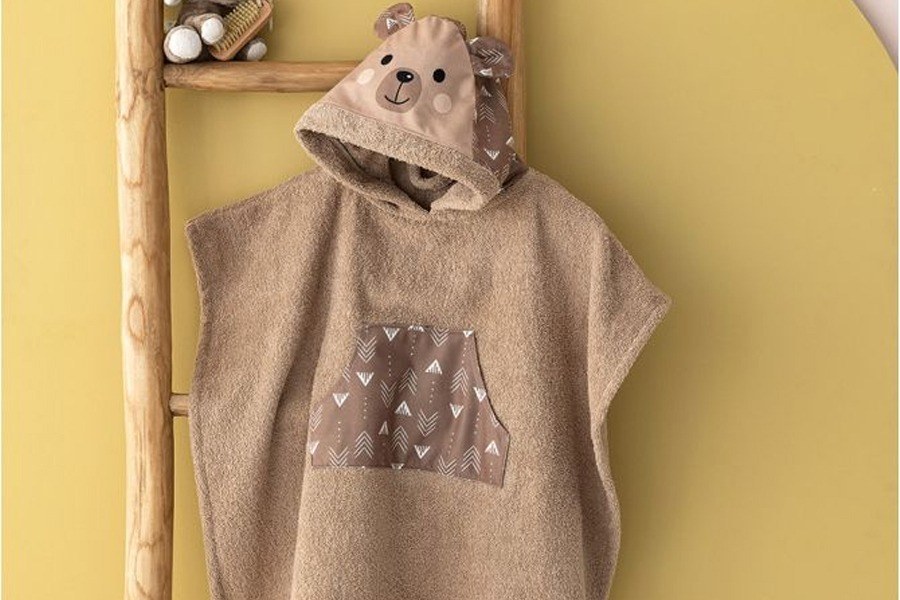
The poncho is similar to the hooded towel but is usually a single piece of fabric that covers the upper part of the baby's body and leaves their arms free. Like the hooded towel, the poncho is easy to put on and provides comfort and freedom of movement, as the baby's hands are free and their mobility is not hindered. It is lighter and more practical for outdoor use or travel since it has no buttons or belts.
Step 3: Choose the quality of the baby bathrobe or hooded towel:
The quality of the material from which the baby bathrobe or hooded towel is made plays a significant role in comfort, durability, and the care of your baby. Each material has its own pros and cons, and your choice should be based on factors like softness, absorbency, durability, and the sensitivity of the baby's skin. Let's look at the most popular options and their properties:
100% Cotton:
A baby bathrobe or hooded towel made of 100% cotton is always the best choice, as cotton is natural, hypoallergenic, and pleasant to the touch. It is very soft and comfortable for the baby's delicate skin. Cotton absorbs moisture very well, making it ideal for after-bath use. It allows the baby's skin to "breathe," preventing the risk of allergies and irritations. Cotton bathrobes are suitable for babies from their very first days of life. What might be slightly more challenging with cotton bathrobes is their maintenance, as they dry slower than synthetics, are harder to iron, and may lose their soft texture more quickly.
Bamboo:
Bamboo is an alternative natural material increasingly used for baby products due to its excellent properties. A bamboo bathrobe is extremely soft and often considered softer than cotton. It has antibacterial and antifungal properties, making it particularly suitable for sensitive baby skin. A bamboo bathrobe dries quickly and absorbs moisture more effectively than cotton, though it is usually more expensive. Also, bamboo is biodegradable and ecological, making it a more environmentally friendly choice as it is a renewable material.
Microfiber:
Microfiber is an extremely fine synthetic material often used in baby bathrobes because it can absorb large amounts of moisture, making it ideal for drying the baby after a bath. Also, a microfiber bathrobe dries faster than cotton or bamboo, making it very practical for daily use. It is lightweight and very soft to the touch, offering comfort. On the other hand, microfiber, like other synthetic materials, is not natural and does not allow the skin to breathe as much as cotton or bamboo, which is why it is not recommended for use on babies during their first weeks of life.
Polyester-Polyamide:
By choosing a baby bathrobe made of synthetic materials, you get a very durable and easy-to-maintain product that dries quickly and is ideal for daily use. It is less breathable than natural materials and may cause irritations to the sensitive skin of newborns, which is why it is not recommended for the first months of an infant's life.
Step 4: Choose the baby bathrobe based on the baby's gender:
Choosing a baby bathrobe based on the baby's gender is mainly an aesthetic decision, as bathrobes are often available in designs, colors, and styles associated with gender.
Baby Bathrobe for Boys:
Bathrobes for boys are usually characterized by more "boyish" designs and colors. Designs may include characters from fairy tales or movies, cars, animals, or sports, and the most common color choices are blue, gray, green, or brown.
Baby Bathrobe for Girls:
Bathrobes for girls are often characterized by more "girlish" designs and colors. Pink and purple usually dominate, and the designs most often feature flowers, hearts, princesses, or fairies, etc.
Unisex Baby Bathrobe:
Unisex bathrobes are ideal for parents who want a neutral color and design that fits a boy or a girl. These bathrobes are usually in mild, neutral colors such as gray, white, and beige, and feature designs like stars and animals.
Step 5: Choose the design of the baby bathrobe:
Choosing the design for baby bathrobes is a subjective matter, as it depends on your personal taste, the child's favorite patterns, and fashion trends. Here are the most popular designs for baby bathrobes:
- Adventure/Action: airplanes, cars, dinosaurs
- Romantic: teddy bears, stars, carousels, hearts, ballerinas, butterflies, floral, princesses
- Fantasy: mermaids, unicorns, cartoon heroes
- Modern/Minimal: geometric, two-tone, modern, solid colors, stripes
- Colorful: prints, multi-colored, polka dots
By choosing the right baby bathrobe, hooded towel, or poncho, you ensure not only comfort and protection for your little one but also a happy and practical way to care for them after the bath. With the right choice of material, size, type, and design, your baby will enjoy the warmth and safety they need.
The information below is required for social login
Sign In
Create New Account