


Wall Lighting Shopping Guide

Wall lights (sconces) are lighting systems installed on the walls of a room to illuminate and decorate a space. While ceiling lights provide uniform lighting throughout the entire area, wall lights can add a softer and more subtle light source that helps create atmosphere and style. In some cases, wall lights are used to focus light on specific points in the room, such as over a painting, a mirror, or a decorative object. In other instances, wall lights can function as reading or task lighting, providing functionality to specific areas of the space. Overall, wall lights offer both utility and decoration, while enhancing the lighting and elevating the atmosphere of the room.

Step 1: Choose the Style of the Wall Light:
Choosing the style of your wall light is essential for creating the desired character and aesthetic in your space. Start by considering the existing design of the room. Select a fixture that matches your current furniture, other lighting fixtures, and the overall aesthetic to create a cohesive environment.
Modern Wall Lights:
Modern style wall lights feature clean lines, often with geometric shapes and contemporary materials. They are suitable for spaces with contemporary decoration and minimalist aesthetics. If you want to add a sense of renewal and innovation to your space, modern wall lights are the best choice.
Classic Wall Lights:
Classic style wall lights feature more timeless lines. They are usually made from traditional materials such as metal, glass, and wood. These fixtures offer a classic and elegant feel and are ideal for spaces with traditional decor or for those seeking a timeless aesthetic.
Vintage Wall Lights:
Vintage style wall lights represent characteristics of previous eras and can provide a sense of retro charm and hospitality to your space. Vintage wall lights often feature retro designs, aged finishes, and antique-inspired details.
The style you choose depends on which of these characteristics best match your decor and the overall style of your space. Choose what you like most and what makes you feel comfortable and happy in your environment.
Step 2: Choose the Type of Wall Light:
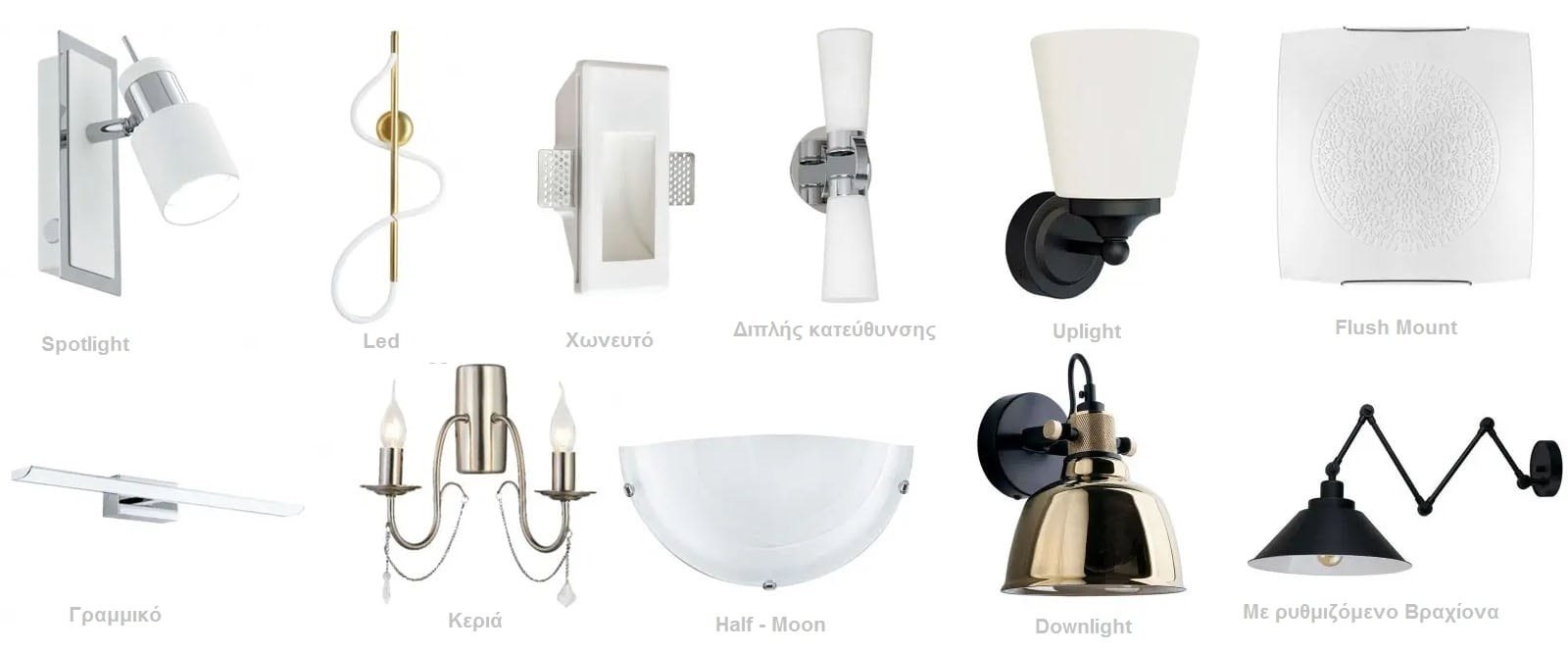
Downlight Wall Sconces:
These are wall fixtures designed to provide directed downward lighting. This means the light they emit is pointed toward the floor or a specific spot, creating focused and discreet illumination. These types of fixtures are very useful for various decoration and lighting applications. For example, they can be used to create atmosphere and highlight specific areas of the living room, such as a wall with paintings or a bookshelf. They are often used as an alternative to classic table lamps next to the bed, providing subtle light for reading or relaxation, or they can be placed in hallways and stairs to enhance safety and aesthetics.
Uplight Wall Sconces:
These are fixtures that orient light upwards, creating illumination toward the ceiling and the upper part of the wall. This produces a unique and atmospheric effect that adds dimension and interest to a space. Uplight wall sconces can be used in various settings, such as the living room, the dining room or the hallway to add height and depth. You can also use uplight sconces behind a bed for a relaxing atmosphere or in commercial spaces like spas and hotels where tranquility is key.
Bi-directional Wall Sconces:
Bi-directional wall sconces include both uplight and downlight illumination, offering light toward the ceiling as well as toward the floor. This design creates a balanced and dynamic lighting effect that adds depth, height, and architectural interest to the room. They are perfect for achieving the popular "architectural lighting" look in a variety of spaces.
Flush Mount - Wall Plafonnier:
Wall fixtures where the entire surface sits flush against the wall resemble ceiling lights (plafonnier), as they have no protruding elements like arms or decorative extensions. This type of wall fixture is excellent for providing broad, uniform lighting and can be used in any room of the house.
"Candle" Wall Sconces:
Give your home some vintage charm by installing candle-style wall sconces. These sconces are designed to look like traditional candles and are often mounted on decorative arms. Their bulbs can be either fully exposed or gently covered by a small fabric shade, providing a warm and inviting atmosphere.
Adjustable / Swing-Arm Wall Lights:
These wall lights feature movable arms and are designed for adjustability. They are perfect as bedside reading lights, next to an armchair or as task lighting by bathroom sinks or a bedroom vanity to provide focused light for makeup. The arms can often pivot, swing horizontally, or move vertically.
Half-Moon Wall Lights:
Similar to flush-mount sconces, half-moon sconces sit against the wall without protruding elements. They are shaped like half-moons facing upwards, with a rounded bottom and a flat, open top. Half-moon sconces work well in any room and offer a soft diffusion of light.
Spotlight Wall Lights:
These wall fixtures resemble ceiling spots but are mounted on the wall. They often emit a focused beam of light that can frequently be directed via rotating heads or by adjusting the beam angle.
Recessed Wall Light:
The majority of a recessed wall light is installed inside the wall, so the light source sits level with the wall surface. These fixtures are often simple in design and include features to ensure light is directed downward, making them popular for lighting stairs and walkways.
Linear Wall Lights:
Linear wall lights are fixtures with a long, narrow form that are mounted along the wall. They offer a modern and clean aesthetic. Linear lights can work as decorative elements to add depth, as task lighting above a desk, or to highlight decorative features like a painting or a mirror.
Integrated LED Wall Lights:
Wall lights with integrated LED light sources represent a modern and advanced approach to lighting. In these types of fixtures, LED bulbs are built directly into the fixture design rather than being replaceable. They often feature unique, contemporary shapes and offer options for brightness and even color control, allowing you to tailor the light to your needs.

Step 3: Choose the Quality of the Wall Light:
The material from which a wall light is crafted has a significant impact on its appearance, functionality, and lifespan. Each material has its own advantages and characteristics:
- Glass: Glass fixtures offer brilliance, uniform light diffusion, elegance, and a wide variety of designs and colors. They are suitable for modern, classic, and minimal environments and can harmonize in all areas, from living rooms and dining rooms to bedrooms and hallways.
- Plastic / ABS / Acrylic / Polypropylene: Plastic fixtures are affordable, lightweight, and durable. They are available in a variety of colors and designs and are suitable for humid areas. They are ideal for kids' rooms, youth spaces, outdoor areas, and more casual settings.
- Metal / Steel / Aluminum: Metal fixtures are distinguished by their modern aesthetic and durability. They provide an industrial style and are available in various finishes (polished, matte, patina, etc.). They are suitable for contemporary spaces with modern or industrial design and are an ideal choice for any residential or professional interior and exterior space.
- Wood / Bamboo / Rattan: Wooden lamps offer natural warmth to the space, are eco-friendly, and stand out for their unique texture and appearance. They create a Zen aesthetic and are timeless, rustic, or country-style. They are suitable for spaces with rustic, natural, boho, or cottage styles.
- Fabric: Fabric fixtures allow light to diffuse softly into the space, creating warm, welcoming, and atmospheric lighting. Ideal for modern and classic residential and professional areas.
- Wicker: Wicker lighting offers natural and sophisticated illumination, providing a decorative touch with an exotic or island vibe. They are suitable for coastal homes, outdoor areas, boho environments, and interior decoration with natural elements.
- Ceramic / Plaster / Marble: Fixtures made of ceramic, plaster, or marble exude technical and artistic value, unique texture, and a sophisticated appearance. They are suitable for classic, modern, and minimalist living rooms, bedrooms and offices, and can also be used as decorative lighting statement pieces.
- Crystal: Crystal fixtures offer sparkle, elegance, and a luxurious appearance to any space. They are an exquisite choice for environments with timeless and fine aesthetics.
- Cement / Stone / Clay: Fixtures made from "structural" materials offer industrial and contemporary lighting, durability, and a unique look. They are ideal for modern, minimalist, and industrial styles, for both interior and outdoor spaces.

Step 4: Choose a Wall Light with an Integrated LED Light Source or an LED Bulb Socket:
The decision between a wall light with an integrated LED bulb and one with sockets for a bulb that you install yourself depends on several factors. Let's analyze the advantages and characteristics of each to help you make the best choice:
Wall Light with Integrated LED:
Advantages:
- Convenience: No installation or bulb replacement is required, as the LED bulb is built-in and typically has a very long lifespan.
- Energy Efficiency: Integrated LED bulbs are usually extremely energy efficient.
- Design: Integrated LEDs allow for high-quality and innovative designs, as they do not require extra space to house a traditional bulb.
Disadvantage:
- Difficulty of replacement: If the integrated LED source is not replaceable, once it reaches the end of its lifespan, you will need to replace the entire fixture.
Wall Light with LED Bulb Sockets:
Advantages:
- Flexibility: You can choose the specific LED bulb you want, depending on your needs regarding brightness and color temperature.
- Replacement: If the bulb stops working or reaches the end of its life, you can replace it easily.
- Energy Efficiency: You have the freedom to select bulbs with the specific energy rating you desire.
Disadvantage:
- Space Requirements: Replaceable bulbs require a specific socket/fitting and enough space for installation. Consequently, these fixtures often adhere to more traditional shapes.

Step 5: Choose Wall Lights With or Without an IP Rating:
The IP (Ingress Protection) rating refers to the level of protection provided by a lighting fixture against the intrusion of dust and moisture. The IP number consists of two digits. The first digit indicates the level of protection against the entry of solid objects, such as dirt or dust. The second digit represents protection against the entry of moisture at different levels of angles and intensities.
First digit:
- 0: No protection against the entry of foreign bodies and particles. The 0 can also be represented by the character X.
- 1: Protection against solid objects larger than 50mm (e.g., accidental contact with the hand using an open palm). No protection against intentional body contact.
- 2: Protection against solid objects larger than 12 mm (e.g., accidental finger contact).
- 3: Protection against impacts from solid objects larger than 2.5 mm (e.g., tools and wires).
- 4: Protection against solid objects larger than 1 mm (e.g., fine tools and wires, as well as nails, screws, and other potentially invasive small objects).
- 5: Partial protection from dust and other particles, so that ingress will not harm or prevent the satisfactory performance of internal components.
- 6: Complete protection against dust and other particles (dust-tight).
Second digit:
- 0: No protection against moisture ingress.
- 1: Protection against water droplets falling at an angle up to 15° from the vertical axis.
- 2: Protection against water droplets falling at an angle up to 60° from the vertical axis.
- 3: Protection against water droplets falling at an angle up to 60° from any direction.
- 4: Protection against water splashes from any direction. Tested for at least 10 minutes with an oscillating spray (limited ingress permitted with no harmful effects).
- 5: Protection against low-pressure jets (6.3 mm) of directed water from any angle (limited ingress permitted with no harmful effects).
- 6: Offers protection against powerful jets (12.5 mm) of directed water from any direction.
- 7: Protection against complete immersion for up to half an hour at depths between 15 cm and 1 meter (limited ingress permitted with no harmful effects).
- 8: Protection against extended immersion under higher pressure (i.e., greater depths).
When looking for wall lights, the IP rating can be important depending on the location of use and environmental conditions. Considering the following criteria, you can decide if you need wall lights with a specific IP rating:
- Indoor Space: In indoor areas where wall lights are not exposed to moisture or dust, the IP rating may not be as critical. In this case, you can choose fixtures with a lower IP rating or fixtures without a specific rating.
- Outdoor Space: If you plan to install wall lights in outdoor areas, such as balconies or patios, a higher IP rating is essential to withstand weather conditions.
- Humid Environments: If you want to place a wall light in areas with high humidity, such as the bathroom, then a high to moderate IP rating (IPX4, IPX5, IPX6) can protect bathroom lights from moisture.

Step 6: Choose the Color of the Wall Light:
Choosing the color of a wall light is a personal decision linked to the style, decoration and your aesthetic preferences. Below are some tips to guide you through the selection process:
1. Compatibility with the Space: Consider the color of the walls, furniture, linens, rugs, decorative items, and the other lighting fixtures in the room. You want to create harmony and cohesion with the existing colors.
2. Contrast or Continuity: Do you want the fixture to stand out against the wall color or create a continuous flow with the rest of the room's palette?
3. Brightness: Some colors reflect more light and create a brighter feeling (e.g., white), while others create a more atmospheric and moody lighting effect (e.g., black, gray).
4. Emotions and Feel: Think about the emotions you want the space to evoke. Warm colors can provoke a sense of sociability and hospitality, while neutral colors offer tranquility.
5. Personality: Choose a color that reflects your personality and personal taste.
Let's look at how certain colors work in wall lighting:
- Gray & Silver: Ideal for classic and modern fixtures, creating an elegant and sophisticated atmosphere. Gray can be neutral or subtly dramatic.
- Yellow & Gold: Warm and bright, they add a cheerful and positive mood. Suitable for energy and dynamism. Gold is specifically capable of adding a sense of luxury to the space.
- Brown: A natural, earthy color that provides warmth and a welcoming aura. Ideal for intimate and comfortable atmospheres.
- Red: A dynamic, passionate, and impressive color. It creates intense points of interest.
- White, Cream, Ivory & Ecru: Clean, light colors that give an impressive and open feel. Ideal for bright, modern, and minimal spaces.
- Black & Anthracite: Serious and elegant, often creating a dark and dramatic aesthetic. Used for contrast in bright rooms.
- Beige & Sand: Calm, natural colors that provide a sense of serenity. Ideal for relaxed atmospheres.
- Blue & Navy: Bold colors that exude coolness and a sense of spaciousness. Ideal for ethereal and maritime themes.
- Multicolor: Creates a multi-dimensional and fun atmosphere, suitable for youth spaces.
- Orange & Tan: Warm and interesting colors that add vitality and energy.
- Green: A natural and refreshing color that creates a sense of natural harmony.
- Pink & Purple: Dreamy and romantic colors that offer a sense of renewal and peace.
Base your choice on the style and emotion you want to express in your space to select the right wall light color.

In our daily lives, lighting is not just a functional necessity but a key factor that shapes the atmosphere and aesthetics of our surroundings. This wall light buying guide has provided an in-depth understanding of the different types of wall lights, their characteristics, and the factors you should consider during the selection process. At designdrops you will find the most impressive wall lights at the best prices on the market! Explore our rich collection of home products with everything for your home and create the decoration of your dreams!
At designdrops you will find lighting buying guides and lighting cleaning guides, which contain valuable tips to help you choose the ideal lighting fixtures and keep them looking like new!
The information below is required for social login
Sign In
Create New Account