








Knives Shopping Guide
Would you like to purchase a knife or equip your kitchen with all the essential knives for a home cook or professional chef? Are you overwhelmed by the countless options? Not sure where to start? Well, look no further, this comprehensive buying guide will help you find the knife that best suits your needs. A quality knife is one of the most essential tools a chef can have. From blade sharpness to handle comfort, a good knife can make a significant difference when it comes to efficient and precise ingredient preparation.
In this comprehensive guide, we will walk you through the process of selecting the ideal knife and offer you some tips and insights to help you find the perfect tool for your culinary needs. Simply answer the following questions, and you will be guided step by step to the best knife choice for you.

Step 1°: What type of use do I need the knife for?
The first step in selecting a knife is to determine your cooking needs. Do you need a knife for general use, or are you looking for something more specific, such as a paring knife or a meat knife? Consider the tasks you will use the knife for and choose one designed to handle those tasks.
Step 2°: Which type of knife should I choose?
There are many different types of knives, each catering to various cutting, slicing, peeling, and deboning needs. Do you think you can name every type of kitchen knife? If you are not a chef, you will probably struggle to keep up with all of them. To help you gain a better understanding of the available knives, we have created this list of different kitchen knife types, including the most common ones you will encounter.
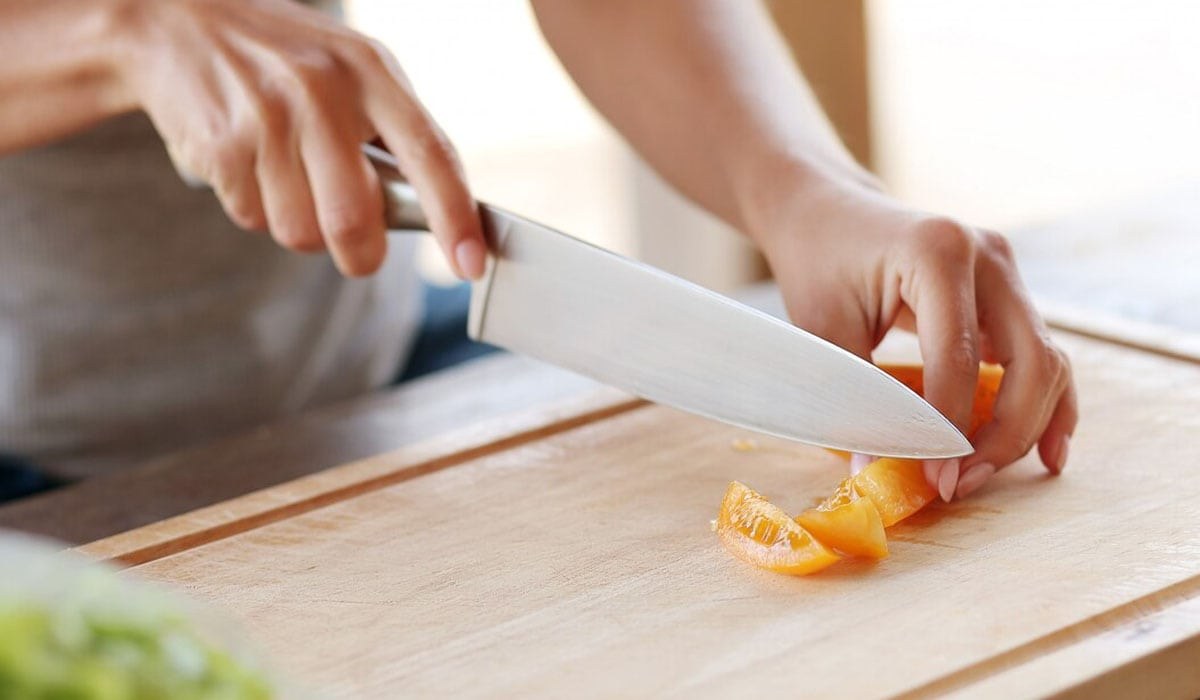
Chef’s Knife:
A chef’s knife is one of the most fundamental and commonly used knives in the kitchen, allowing you to achieve precise cuts and food preparation with ease. It has the following characteristics:
- Straight blade: The blade is usually straight, without serrated edges.
- Ergonomic handle: The handle of a chef’s knife is designed for a comfortable grip and safe use.
- Medium-sized blade: The blade length of a chef’s knife typically ranges from 15 to 30 centimeters. This intermediate size makes it ideal for many kitchen tasks.
- Curved, pointed edge: These knives feature a curved and pointed edge, enabling precise and detailed cutting without obstructing your view.
- The curved blade creates a rocking motion while chopping, just like a professional chef.
Usage: Chef’s knives are used for various purposes in the kitchen, such as chopping and mincing vegetables, fruits, cleaning and finely slicing meat and fish, creating large vegetable chunks, dicing, and more.
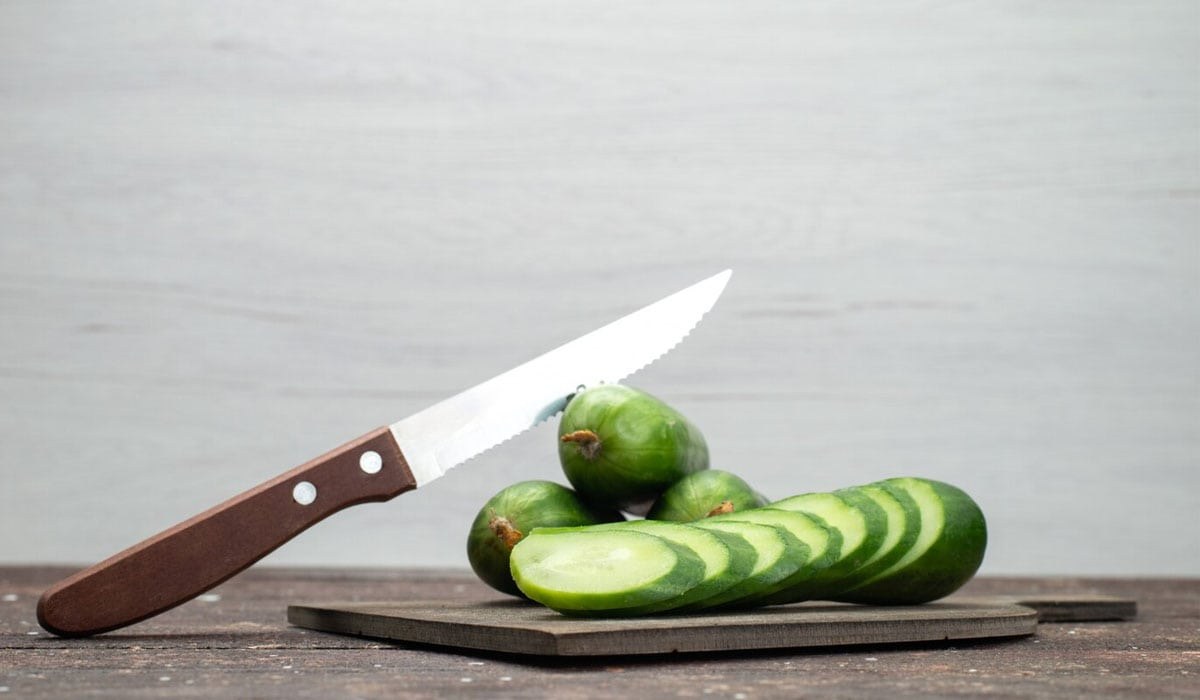
Utility Knife:
A utility knife is a very practical and multifunctional knife that covers many cutting tasks in the kitchen. Its key features include:
- Straight blade: The blade is usually straight and not serrated.
- Medium length: The blade length of a utility knife typically ranges from approximately 15 to 20 centimeters.
- Pointed edge: A utility knife has a pointed edge, ideal for pressure cuts and finely chopped foods.
Usage: The utility knife is highly versatile and frequently used in the kitchen for general cutting and food preparation tasks. It can be used for slicing, mincing, and chopping vegetables, meats, fruits, fish, and more.
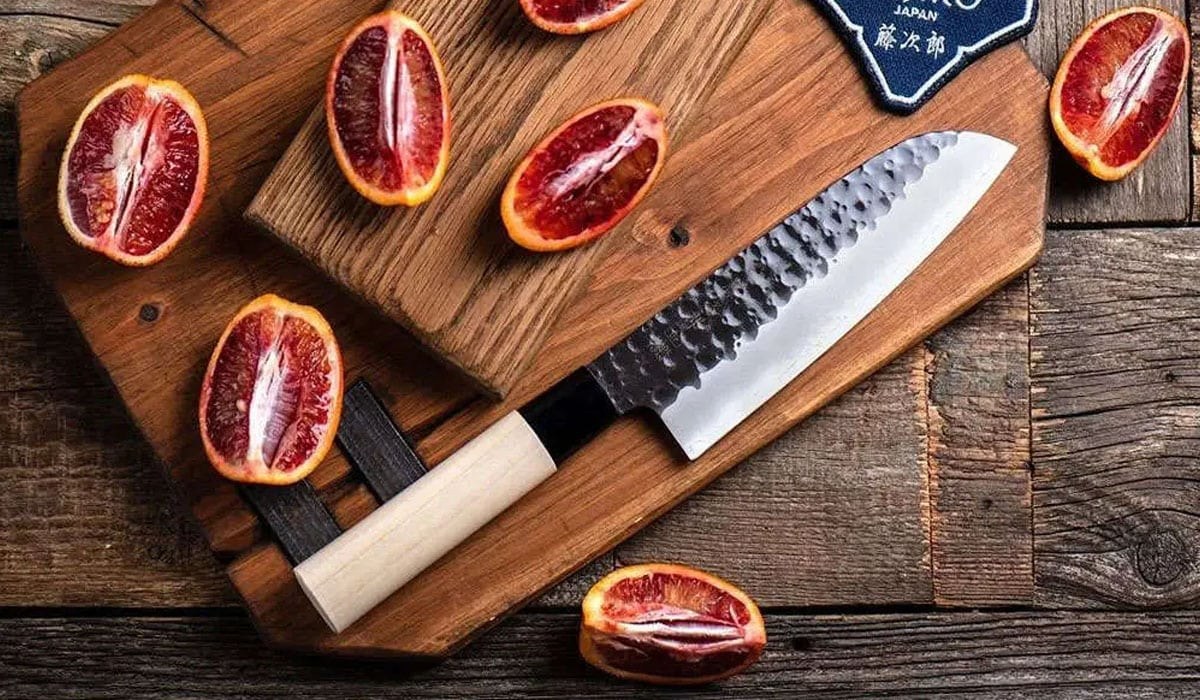
Santoku Knife:
A Santoku knife is a specialized knife originating from Japan, featuring a unique design and characteristics. The word "Santoku" loosely translates to "three uses," referring to the three cutting tasks the Santoku knife is designed for: slicing, dicing, and mincing.
- Lightweight: Santoku knives are generally lightweight and flexible.
- Short, straight blade: The Santoku knife’s blade is typically relatively short, ranging from 13 to 18 centimeters, and straight, without serrated edges.
- Hooked tip: Most Santoku blades have a hooked tip, making them ideal for pressure cuts and finely chopped foods.
- Double-rounded handle: The handle of a Santoku knife is typically double-rounded, offering a comfortable grip.
Usage: The Santoku knife is used for various kitchen purposes and is ideal for cutting and mincing meat, fish, poultry, vegetables, and fruits, as well as preparing food for salads, sushi, and seafood.
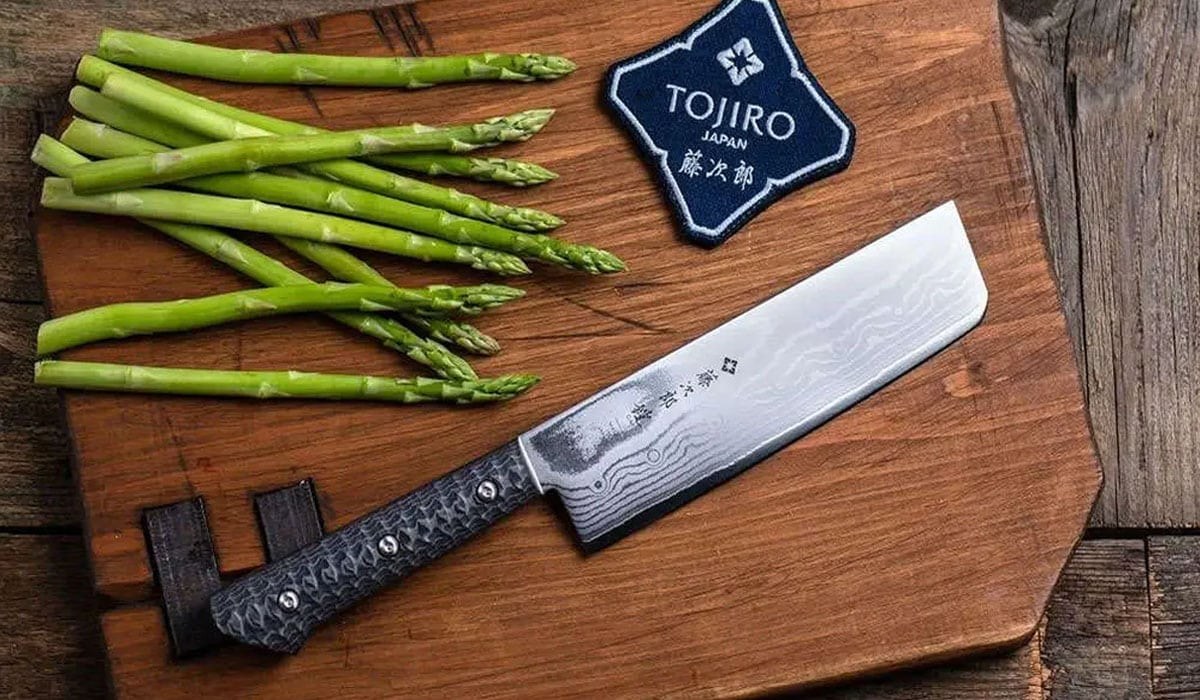
Nakiri Knife:
A Nakiri knife is a traditional Japanese kitchen knife primarily used for cutting vegetables.
- Blade: It features a thin and wide blade with squared edges. The straight blade usually measures 15–18 cm in length.
- Vertical edge: Nakiri blades have a vertical edge, ideal for vegetable cutting, as they do not "break" vegetable cells and preserve their freshness.
Usage: Designed for vegetable cutting, the Nakiri knife has a straight blade that can handle long vegetables (eggplants, carrots) and create ultra-thin slices of cucumber, pumpkin, tomatoes, and more.Its double bevel makes it ideal for both left- and right-handed users. Thanks to its straight blade, Nakiri knives are perfect for julienne, brunoise, and other precision vegetable cuts. It is also an excellent tool for cutting very hard vegetables, such as pumpkins.
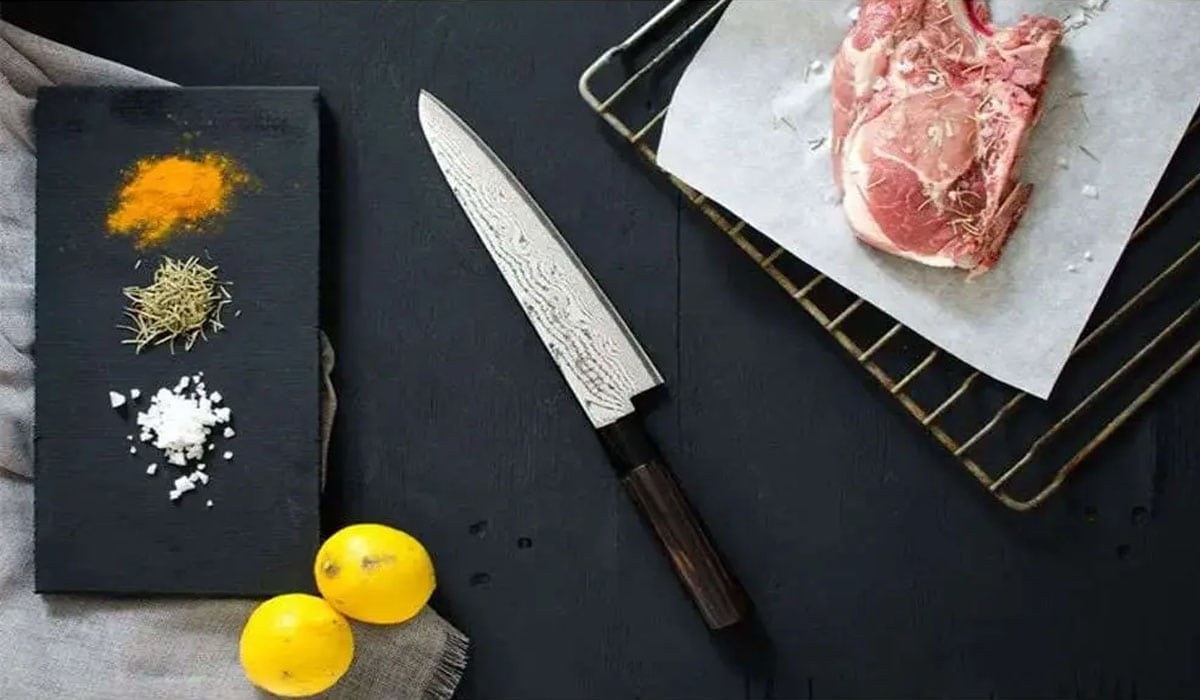
Meat Knife:
A meat knife, also known as a slicer knife, is specifically designed for cutting meat. It is essential for professional chefs and cooking enthusiasts who love preparing meat dishes in their kitchen.
- Exceptional sharpness: Meat knife blades are usually extremely sharp to facilitate meat cutting.
- Large, straight blade: The blade of a meat knife is typically large, around 20–30 centimeters, and straight for efficient slicing and filleting. It is longer and thinner than a chef’s knife for precise thin slicing.
Usage: The meat knife is mainly used for processing meats. It is ideal for filleting large cuts of meat, such as pork or beef steaks, chicken, and turkey breasts. It is also used for cutting meat into small pieces for cooking, such as sautéed dishes, skewers, or stir-fries.
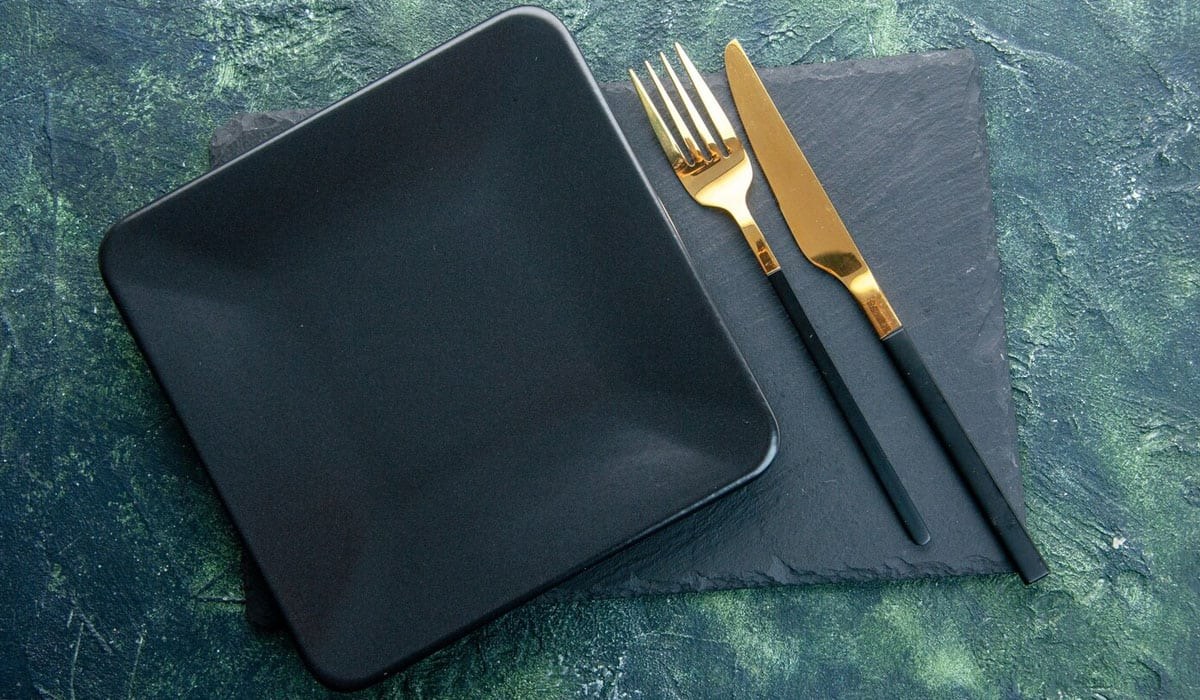
Table Knife:
A table knife is used for cutting various foods in the kitchen but primarily at the dining table. Its characteristics include:
- Small blade: The blade of a table knife is usually small and slightly curved for flexibility and precision in cutting various foods.
- Sharp blade: The blade is sharp to cut various foods effortlessly, including fruits, vegetables, meats, and fish.
- Sturdy construction: The table knife is typically built with durability in mind for reliable cutting performance.
- Handle design: The handle is usually ergonomically designed for a comfortable grip and safe use.
- Elegant design: Table knives are not only high-quality but also aesthetically pleasing, as they adorn the dining table and can elevate the overall presentation of a meal.
Usage: It is used for cutting fruits and vegetables, meat pieces such as chicken, beef, pork, or deli meats, and fish such as salmon, tuna, and more. Beyond basic cuts, the table knife can be used for various other tasks, including peeling fruits, slicing cheese, cutting bread, and much more.
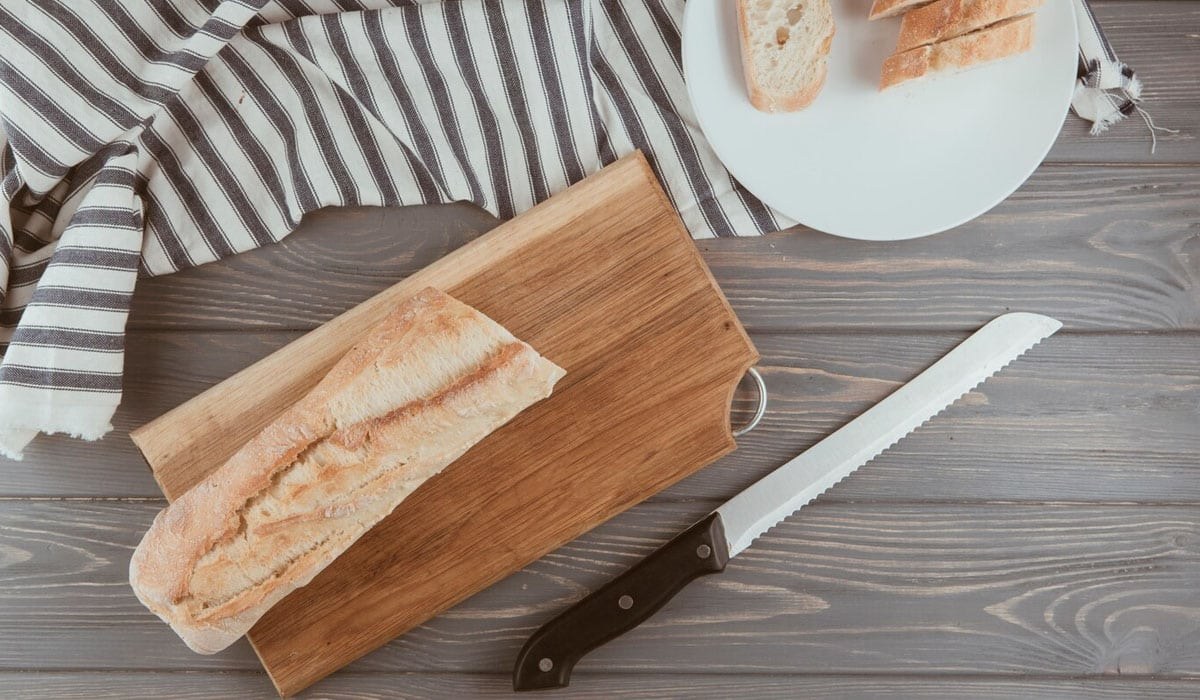
Bread Knife:
A bread knife is a specialized knife designed for cutting bread and baked goods. It features:
- Large, Serrated Blade: The blade of a bread knife is large, typically measuring 20 cm or longer, with a serrated edge that helps slice through bread without crushing or crumbling it.
- Sturdy Construction: Due to the need to cut through rougher surfaces like bread crust, the bread knife is made from durable materials.
Usage: The bread knife is used for cutting bread, including baked goods such as sandwich rolls, cakes, brioche, etc., without causing crumbling. It is also ideal for cutting large fruits and vegetables with a hard rind, such as watermelon, melon, pumpkin, etc.
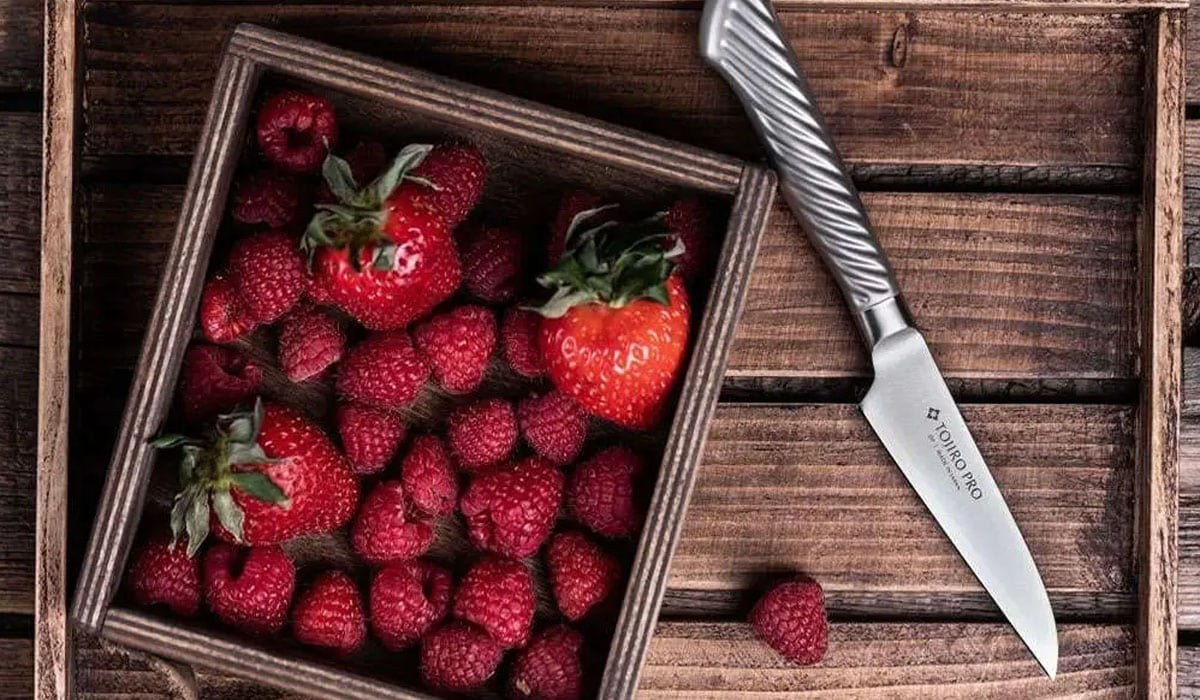
Paring Knife:
A paring knife, also known as a "bird’s beak knife," is a small knife with a narrow and thin blade, typically measuring between 6 and 10 cm in length. Its characteristics include:
- Sharp, Thin Blade: The blade of a paring knife is thin, sharp, and often curved, allowing for precise and detailed cuts.It makes delicate cutting tasks easier and safer, especially when working with smaller foods.
- Short, Ergonomic Handle: The handle of the paring knife is ergonomically designed for a comfortable grip and safe use. It is usually shorter, providing greater control during use.
Usage: The paring knife is mainly used for peeling fruits and vegetables. Its thin and curved blade allows for precise peeling with minimal waste. It can also be used for cutting thin skins or peels from foods such as citrus fruits (lemon, lime, grapefruit). Additionally, it is ideal for removing seeds from fruits and vegetables, such as tomato seeds.
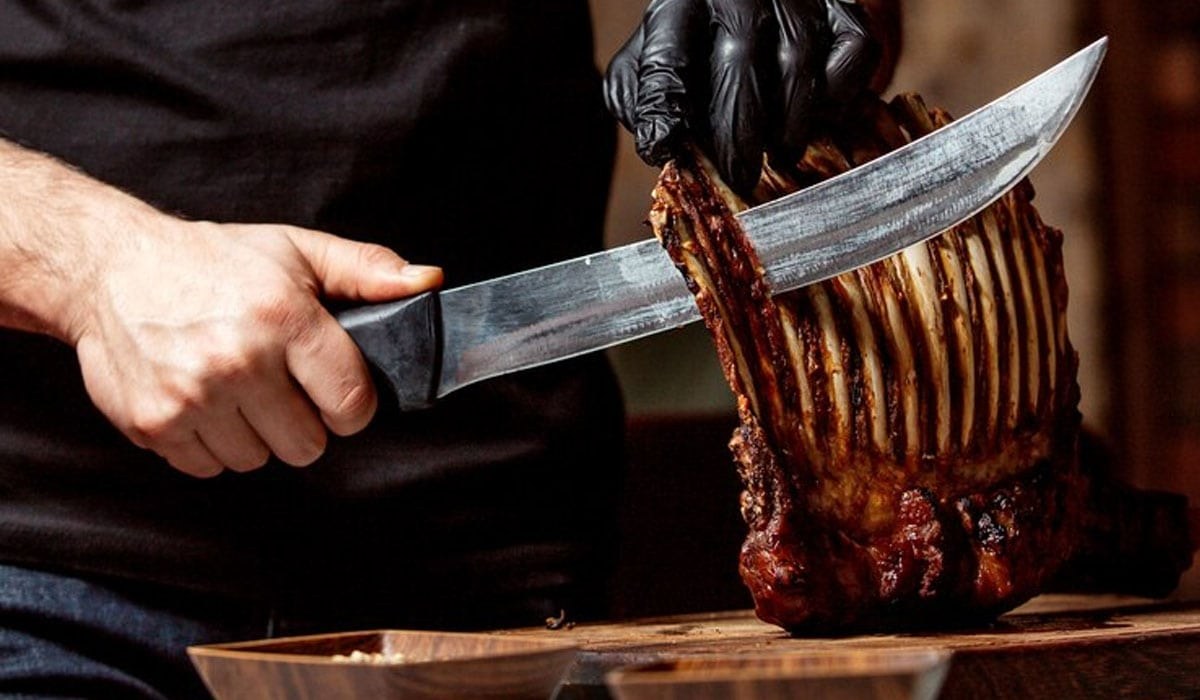
Boning Knife:
A boning knife, also known as a "boning knife," is a specialized knife designed for deboning and cutting meat. It has various characteristics that make it particularly useful in both professional and home kitchens. Here are its key features and applications:
- Thin, Sharp Blade: Boning knives have thin and sharp blades, making it easier to cut through meat tissues.
- Flexible Blade: The blade is usually flexible and adaptable to follow the shape of the bones.
- Narrow Blade: The blade is typically narrow to allow easy insertion between bones and tissues.
- Various Lengths: Available in different lengths depending on the usage. Shorter blades are ideal for detailed work, while longer ones are suitable for larger cuts of meat.
Usage: The boning knife is used for removing meat from bones. This includes deboning beef, pork, chicken, and other meats. It is also used for precision cutting when preparing meat for recipes. Overall, the boning knife is essential for both professional and amateur chefs working with meat.
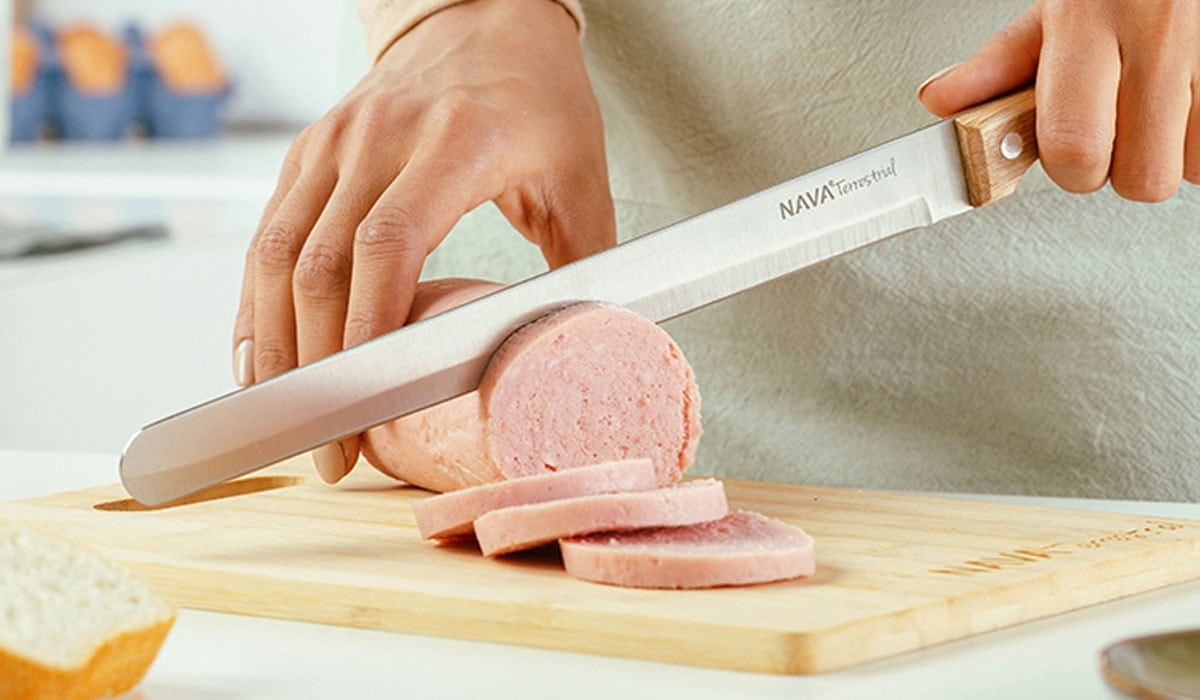
Deli Knife:
A deli knife is a specialized knife designed for slicing large pieces of deli meats such as prosciutto, ham, and more. It has specific features that make it ideal for this purpose:
- Large Blade: The blade of a deli knife is usually over 20 cm or even longer. This extended blade length allows for easy slicing of large cuts of deli meats.
- Rigid Blade: The blades of these knives are usually rigid and do not have a special sharpening angle.
- Ergonomic Handle: Features an ergonomic handle for comfortable grip during use.
Usage: The deli knife is used for slicing large cuts of deli meats such as prosciutto, ham, and other cooked meat products. It allows for thin and precise slices required for serving these delicacies. It can also be used for slicing thin fillets of cured meats like bacon or pancetta, depending on the blade length.

Fruit Knife:
A fruit knife is a small knife with a short blade specifically designed for cutting and preparing fruits. It has specific characteristics:
- Small Blade Length: The blade of a fruit knife is usually very short, about 6-10 cm in length. This small size allows for precise and controlled cutting of fruits.
- Straight Blade: The blade of a fruit knife is typically straight and smooth, without serrations, ensuring a clean cut.
- Thin and Lightweight Construction: Fruit knives are usually very lightweight and easy to handle.
- Rounded Edge: The fruit knife often features a rounded edge for safe and easy cutting.
Usage: The fruit knife is used for cutting, peeling, and preparing fruits such as apples, oranges, bananas, pears, peaches, and more. It is also useful for cutting small vegetables like bell peppers, tomatoes, and cucumbers, where precision and controlled cutting are required.
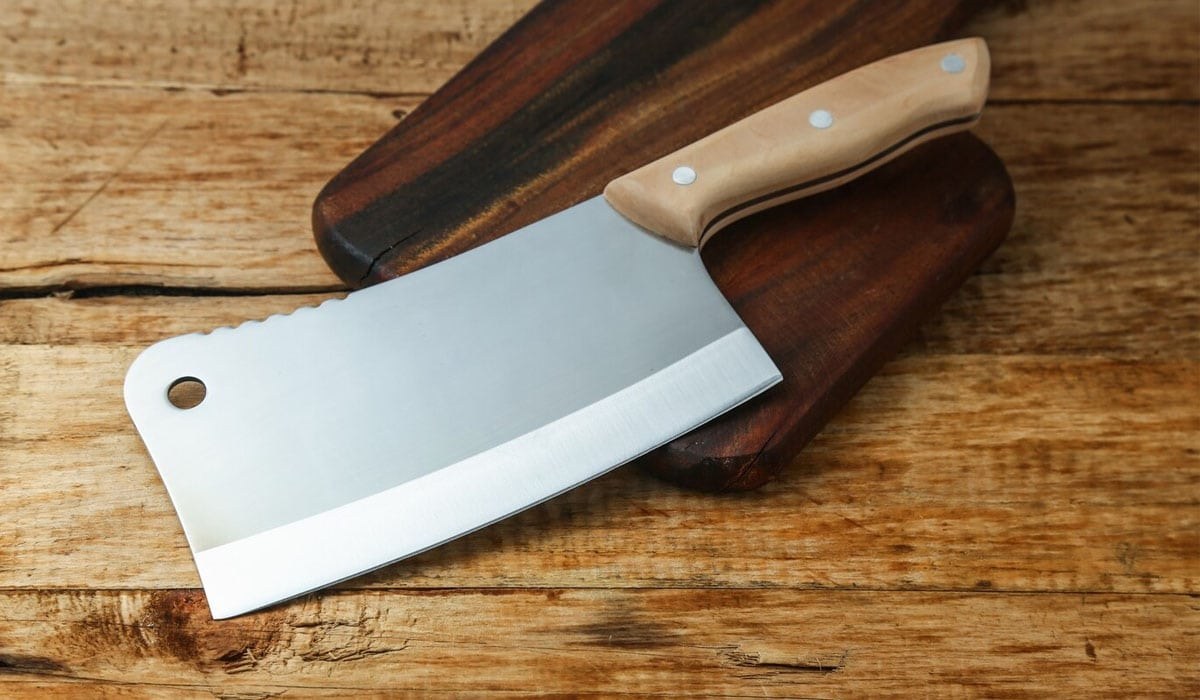
Cleaver:
A cleaver is a knife with a large blade, specifically designed for chopping and cutting meat. Its key features include:
- Large Blade: The cleaver has a large, wide, and flat blade, usually made of stainless steel. The large blade allows for easy cutting of meats.
- Heavy Construction: Cleavers are typically heavy and built for durability and stability.
- Full-Tang Design: The cleaver’s blade often extends through the entire handle, making it highly durable.
Usage: The cleaver is used for cutting meats such as beef, pork, and lamb into large pieces or for chopping meats for cooking. Beyond meats, it can be used for chopping large quantities of tough vegetables like carrots. Finally, the cleaver is useful for chopping meat that contains bones.
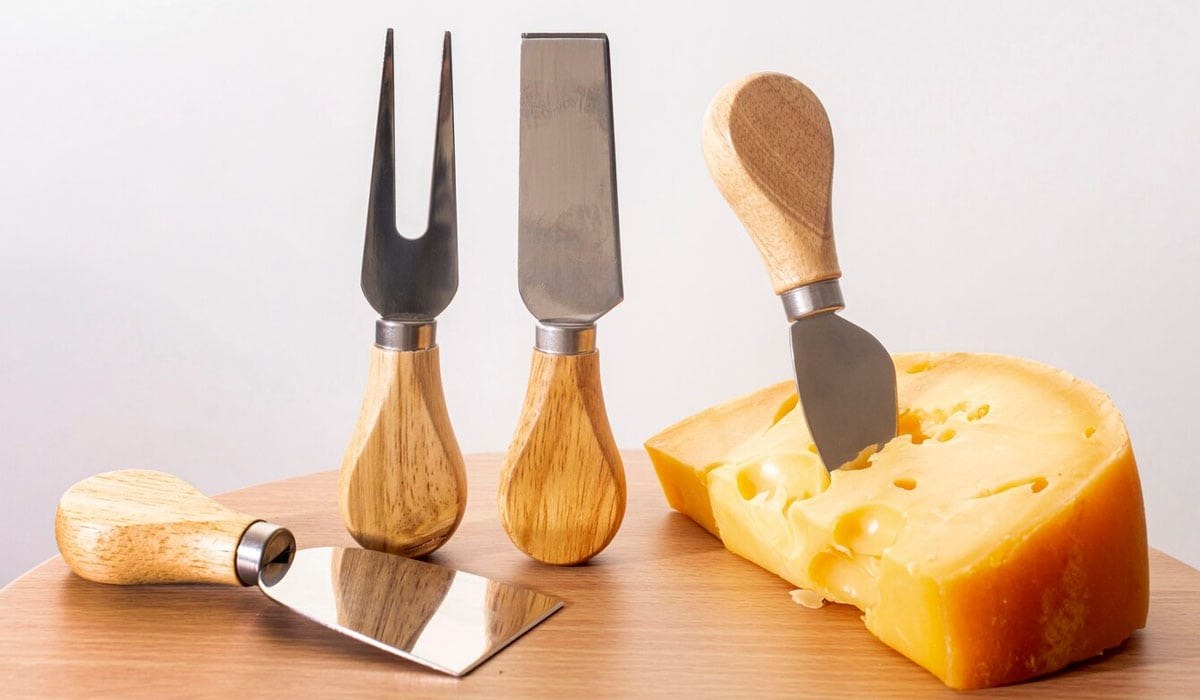
Cheese Knives:
Cheese knives are specialized tools for cutting and serving cheeses. There are various types of cheese knives, each with unique features. The key characteristic is a blade with perforated holes that prevent cheese from sticking to the blade. It is usually used for soft cheeses and semi-soft varieties. Some of the main types include:
- Double-Blade Cheese Knife: Features two blades that help in the easy slicing of cheeses. Suitable for a wide variety of cheeses.
- Cheese Spreader Knife: Has a short, thin, and straight blade used for spreading cheese on slices of bread, toast, or crackers.
- Hard Cheese Knife: Has a strong, sharpened blade designed for cutting hard cheeses such as Parmesan.
- Soft Cheese Knife: Features a serrated blade for cutting soft cheeses like Brie and ricotta.
- Cream Cheese Knife: Has a small, thin blade with a rounded edge, used for spreading cream cheese on bread and other foods.
Usage: Cheese knives are used for cutting, serving, and presenting cheeses, often designed to match the specific texture and consistency of each cheese type. They are particularly useful when preparing and serving a cheese platter with a variety of cheeses and deli meats.
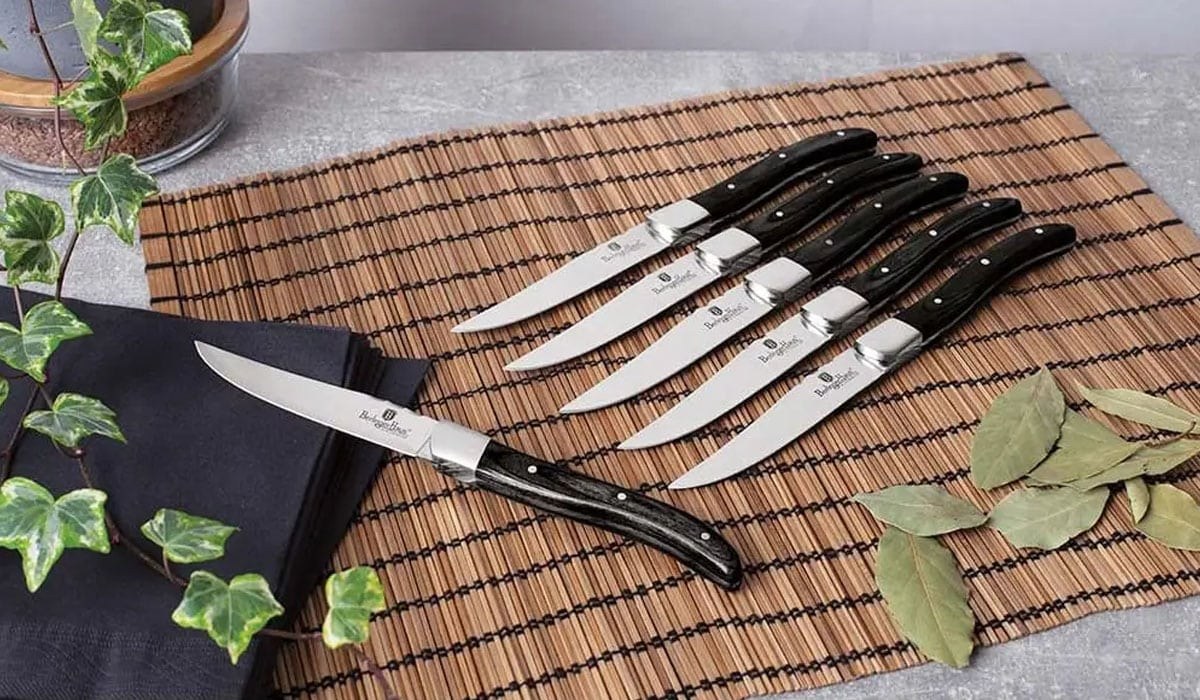
Knife Sets:
Knife sets are typically designed to cover a wide range of everyday and specialized cutting needs in the kitchen. A basic knife set usually includes the following knives:
- Chef’s Knife: The most important knife in any kitchen.
- Bread Knife: Features a serrated blade.
- Meat Knife: Used for various meat cuts.
- Utility Knife: A versatile knife essential in every kitchen.
- Paring Knife: A short, thin-bladed knife ideal for peeling fruits and vegetables.
- Peeler: Many high-quality knife sets include a peeler to cover all preparation needs for culinary creations.
- Kitchen Scissors: Scissors are essential for cutting vegetables, fruits, meats, and herbs. They can also be used for easily opening food packaging.
It is evident that there is a vast variety of knife types, each ideal for different uses in the kitchen. The list above includes the most common ones, but there are dozens of other specialized knives, such as butter knives, tomato knives, deba knives, oyster knives, etc.
Step 3º: What material should the knife blade be made of?
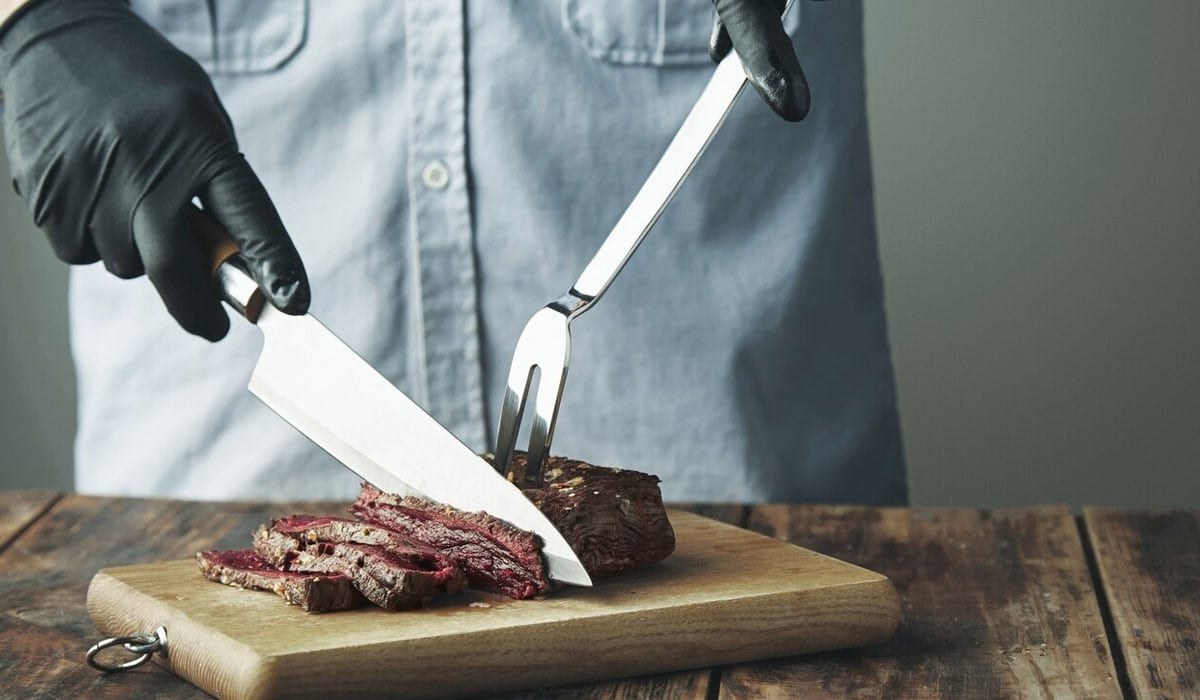
Knife blades are made from various materials, and the advantages of each depend on the user's needs and intended use. Some of the primary blade materials include:
Stainless Steel
This is the most popular material for knife blades. It offers resistance to corrosion and rust, is versatile, and maintains a sharp edge. Stainless steel blades retain their sharpness for an extended period and are suitable for all uses. They do not react with food or release substances that could affect the taste. Overall, a stainless steel knife is an investment that will last for many years and facilitate everyday cooking.
Ceramic
Ceramic blades are incredibly thin and sharp, retaining their edge for a long time. They provide a precise and fine cutting edge, making them ideal for delicate cutting tasks. They do not rust or react with food, making them suitable for cutting any type of food. Additionally, they are significantly lighter than steel knives, making them easy to handle and allowing for greater maneuverability. However, there are some drawbacks: ceramic knives are more fragile than steel knives and may chip or crack if dropped or struck against hard surfaces. They are not suitable for cutting food with bones or frozen products.
Carbon Steel
Carbon steel knives offer several advantages that make them an excellent choice for many chefs. They maintain an extremely sharp edge, making them ideal for precise cutting tasks. While they may require more frequent sharpening compared to stainless steel knives, carbon steel retains its sharpness for a long time if properly maintained. Carbon steel knives are highly effective and allow the chef to perform precise and effortless movements. The main drawback is their susceptibility to staining, which can lead to oxidation and the development of a patina over time. Therefore, if you choose a carbon steel knife, ensure it has a high carbon content, as this provides all the benefits of carbon steel while offering greater resistance to staining.
Damascus Steel
A Damascus steel knife is an excellent choice for many reasons. Damascus steel creates beautiful and unique patterns on the knife blade. The multiple layers of steel produce intricate designs that make each knife one of a kind. Damascus steel blades are renowned for their sharp edge and superior cutting performance. They cut with precision and ease, requiring less frequent sharpening than other knives. Damascus steel is also known for its durability, as knives made from this material can withstand extensive use and intensive handling for many years. However, they tend to be more expensive than knives made from other materials.
Steel
Steel knives are known for their durability and do not require special maintenance. They retain their sharpness for a considerable period, requiring less frequent sharpening compared to other blade materials. They provide sharp and precise cuts, making them ideal for slicing, deboning, and preparing food. They are resistant to rust, provided they are not exposed to water for prolonged periods.
In addition to the aforementioned blade materials, other materials are also used in knife production. However, these are much less common, so we do not focus on them extensively. One such material is nylon or plastic, where the blade is not very sharp and usually has serrations. The benefits include safety, usability, and resistance to discoloration.
Step 4º: What material should the knife handle be made of?
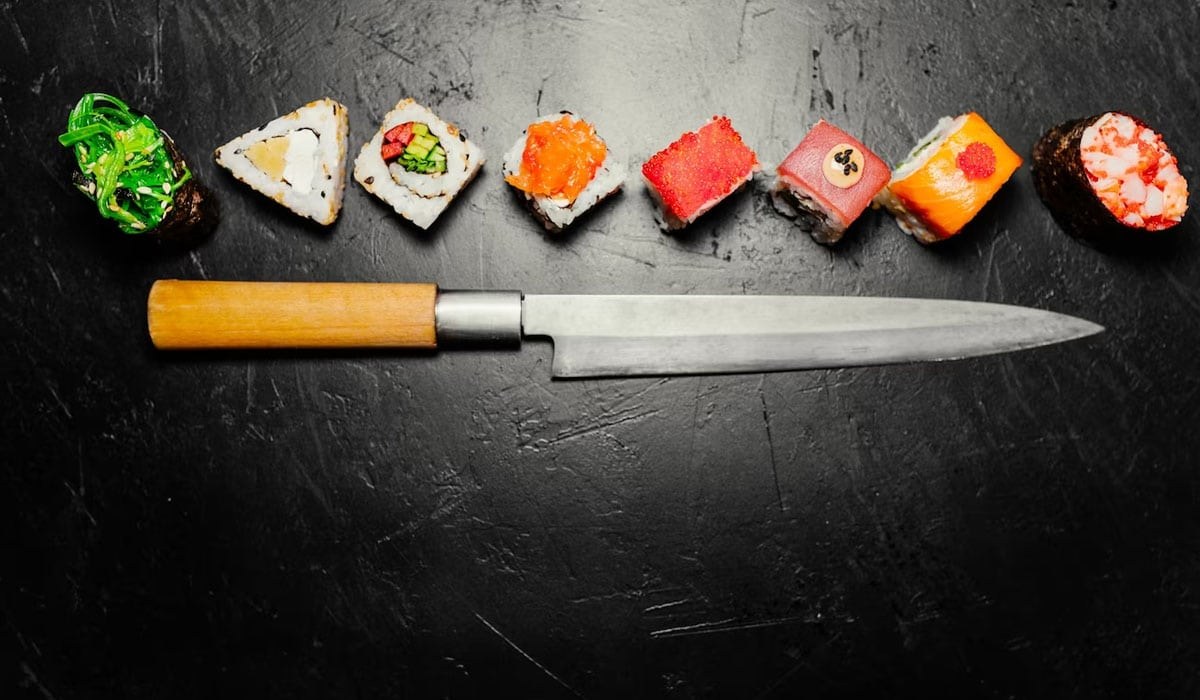
After the blade, the most important part of a kitchen knife is the handle because, regardless of how exceptional the blade is, if the handle is uncomfortable and poorly designed, you will not want to use the knife. Here are the most common handle materials you will encounter:
Wood:
Advantages
Softer woods can be very comfortable to hold.
Wood is a very common material for knife handles, known for its classic appearance and feel.
The vast range of options available, as handles can be made from various types of wood, such as olive or walnut, each offering different levels of hardness, durability, and aesthetics.
Disadvantages
Despite being the classic handle material, wood has drawbacks, such as susceptibility to bacteria and moisture, as well as being unsuitable for dishwashers.
Synthetic Materials (Plastic, Silicone, Polypropylene):
Advantages
Synthetic handles can be divided into various categories, such as polypropylene, silicone, and plastic.
Handles made from synthetic materials are much easier to maintain in like-new condition for a long time compared to wooden handles, as they do not absorb bacteria, moisture, oils, or odors.
Disadvantages
When exposed to extreme temperatures, synthetic materials may become more brittle and prone to cracking.
They are lighter than other materials, which can cause an imbalance in a knife with a large and heavy blade.
Stainless Steel:
Advantages
Of all possible handle materials, stainless steel is the most hygienic and easiest to maintain.
It is highly durable and has a sleek appearance.
Disadvantages
While synthetic handles are very lightweight, stainless steel handles are quite heavy. This can shift the knife’s balance toward the handle, leading to hand fatigue.
Some manufacturers have addressed this issue by designing knives with hollow handles.
Another concern is that stainless steel can become slippery when wet. However, some designers have added ridges or textures to provide better grip and reduce slipperiness.
Step 5º: What is the Rockwell scale in knives?
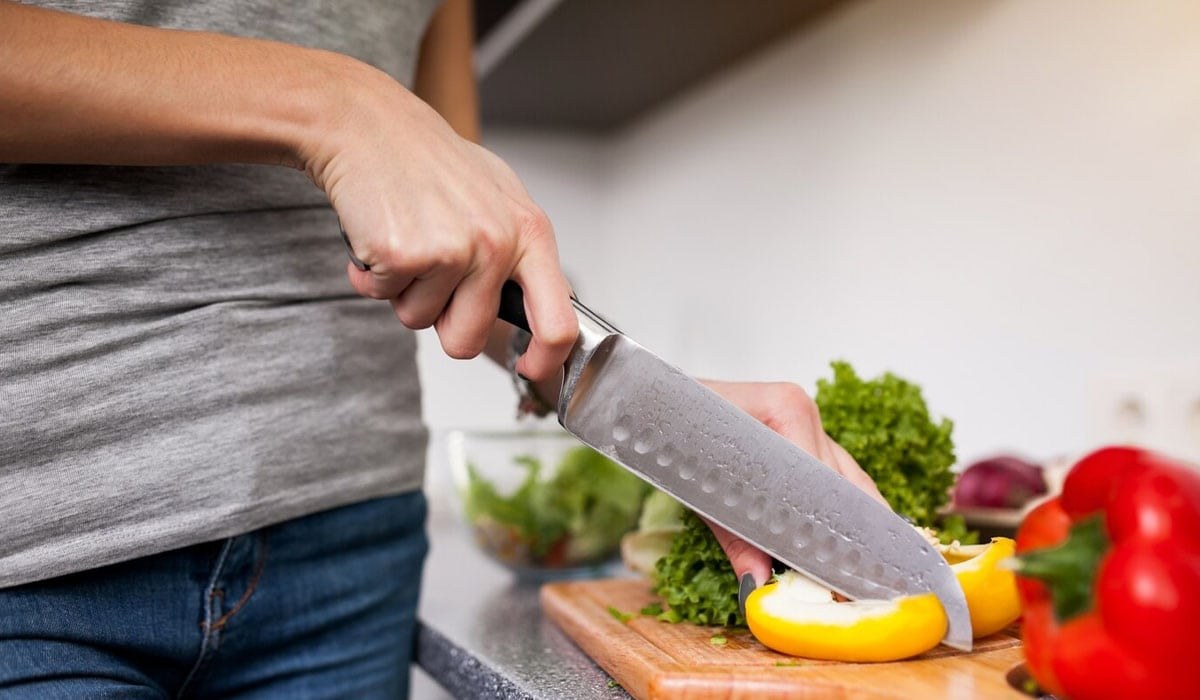
One of the most significant decisions for a knife manufacturer is the type of steel used for the blade, as each type has its own advantages and disadvantages. To give knife buyers a better understanding of the quality of steel blades, the Rockwell scale (HRC) was created. In short, the Rockwell scale measures the hardness of a metal. High-quality blades start at a Rockwell hardness of around 56, with the hardest blades reaching 60 or more on the scale. Blades with lower ratings will be more flexible and, therefore, less brittle, whereas those at the higher end of the scale will be incredibly sharp but more fragile and prone to damage. If you want to purchase a high-quality stainless steel knife, look for one that has been hardened to at least 56/58 on the HRC scale. Anything below this will result in a knife that loses its sharpness relatively quickly.
Step 6º: Does the color of the knife matter?
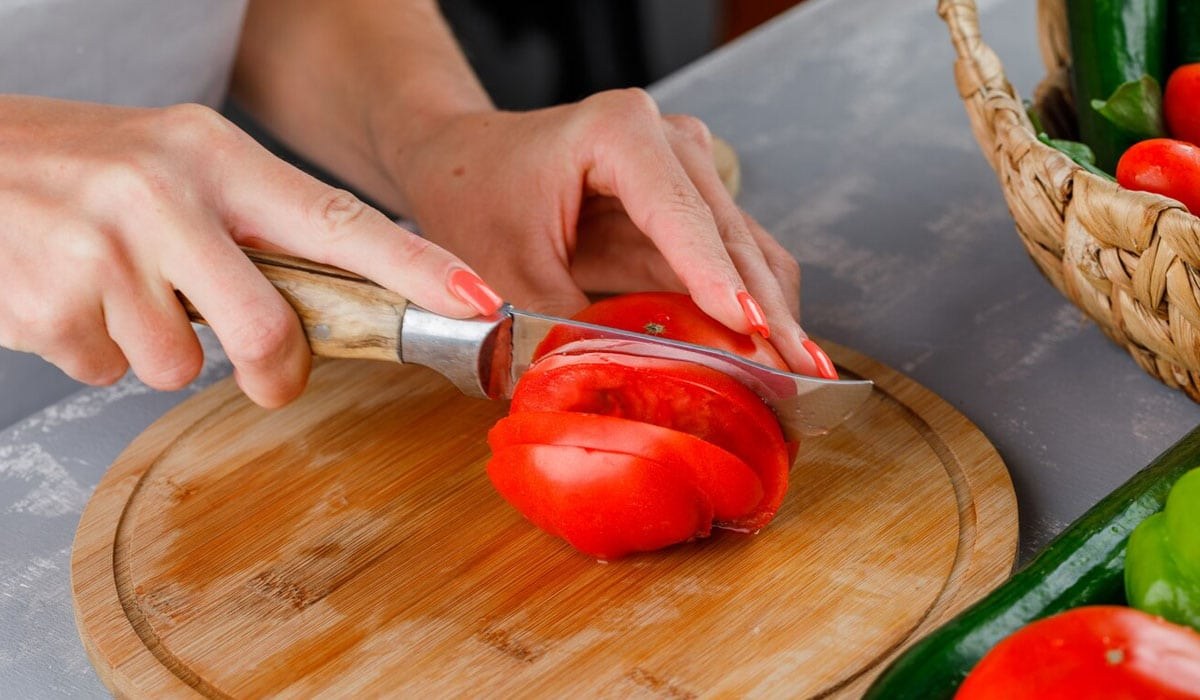
The color of a knife is generally less important than the materials and functional aspects you should consider when choosing a knife. However, if you wish to select a specific color, consider the following factors:
- Personal Preference: Personal preference is important. If you like a particular color and feel comfortable with it, then that is the most significant factor.
- Matching with Other Kitchen Tools: If you already have a set of knives or other kitchen tools in a specific color, you may want to choose a knife that complements the existing set.
- Ease of Cleaning: Knives with light-colored handles may show stains more easily than darker colors. If you are concerned about stains, consider choosing a knife with a dark or matte surface.
- Decorative Purpose: If the knife is also intended for decorative purposes in your kitchen, you may want to choose a color that matches the overall aesthetic.
Overall, the color of the knife is primarily a matter of personal preference, while the functionality and quality of the blade are the more crucial factors in selecting a knife.
Step 7º: What are the most famous knife brands?
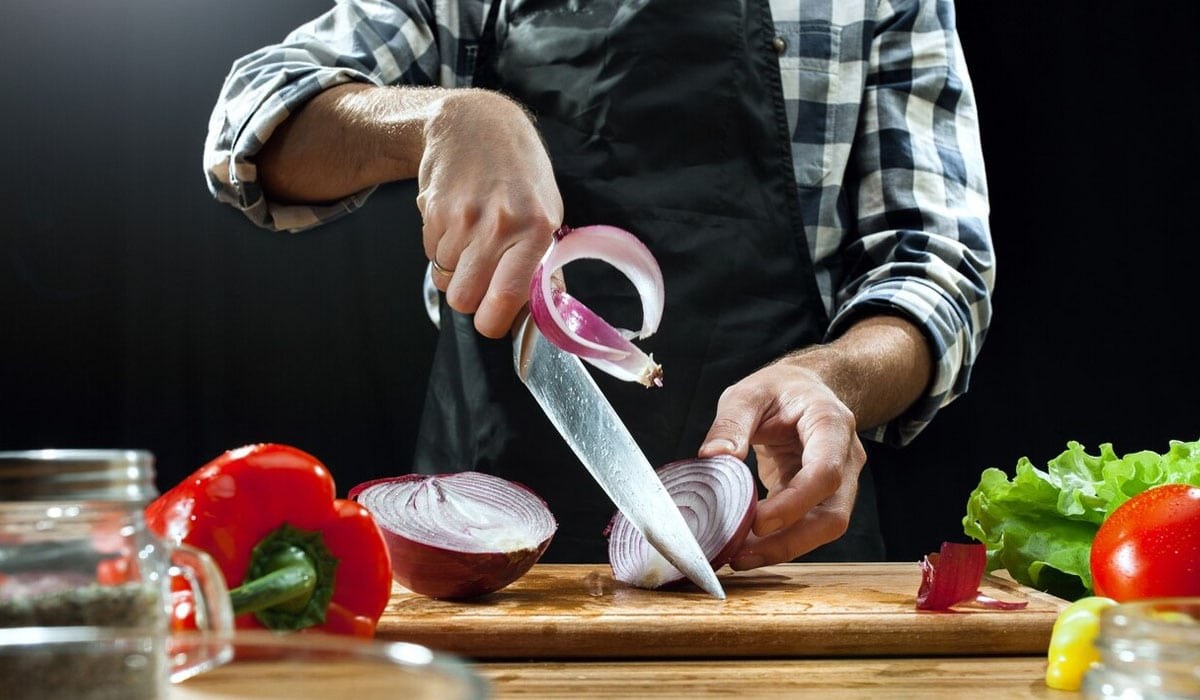
Many renowned brands manufacture high-quality knives. Some of the most distinguished and well-known knife brands include:
- Tojiro: A renowned Japanese company producing high-quality Japanese knives.
- Wusthof: A famous German company with a long history of knife production, specializing in high-quality German-style knives.
- Brabantia: Known for the quality of its kitchen tools, including knives.
- Kai: A Japanese company that manufactures high-quality knives using advanced technology.
- Tokyo Design: Creates knives and kitchen tools with modern and distinctive designs.
- Tescoma: Produces a variety of quality kitchen tools, including knives.
- Kyocera: Known for its ceramic knives, offering precision cutting.
- Victorinox: Famous for its multi-tools but also manufactures excellent knives, renowned for their durability and Swiss craftsmanship.
These companies offer various knife models for diverse needs and preferences, therefore it is essential to examine the options they provide and select the one that best suits your individual requirements. At designdrops, you will find all these renowned brands at unbeatable prices, as well as many other notable ones, such as gefu, nava, alessi, brandani, espiel, and others. In the world of cuisine, knives are an integral part of successful meal preparation. By choosing the right knives, you can enhance your performance in the kitchen and enjoy cooking more than ever.
This guide has provided you with detailed information about the various types of knives, their characteristics, and how to select the appropriate knife for your needs. Always remember that knives are investments in your kitchen, and quality is the most significant factor. Invest in high-quality knives that you will find at designdrops, as they will endure through time and use, and will help you achieve the best possible results. And do not forget, the proper care and maintenance of your knives are just as important as their selection, so follow the manufacturer's instructions as well as the advice from the Knife Cleaning Guide compiled by the experts at designdrops.
The information below is required for social login
Sign In
Create New Account