


Cookware Cleaning Guide
Cleaning the cooking utensils is one of the most important processes in the kitchen. We usually choose our utensils based on their material of construction, so that they serve our needs in food preparation, but it is equally important to know how to clean and maintain each material. Each material, such as stainless steel, aluminum, enamel, and cast iron, requires different care to be kept in excellent condition. In this designdrops guide, we will present the ideal practices for cleaning our cooking utensils based on their material, offering useful tips that will help you keep your utensils clean and functional.

How to clean your cooking utensils according to their material of construction:
Cleaning Stainless Steel Cooking Utensils
Stainless steel utensils are extremely popular for their durability and efficiency. They are not difficult to clean, as a little dish liquid and warm water are sufficient. Under no circumstances should you let these utensils soak for long, and you should know that the longer the stains remain on the utensils, the more difficult their removal will be. Do not use a wire sponge to scrub the stains. For very difficult stains, you can use hydrogen peroxide and baking soda, but you must then rinse well with soap and water.
Cleaning Carbon Steel Cooking Utensils
Carbon steel cooking utensils are washed with warm water and a small amount of soap. To remove stains, use a brush, a scouring pad, or a non-scratch sponge. If you notice stuck food on the surface of your utensil, you can simmer a little water for 4-5 minutes, and after letting it cool down slightly, you will see that the utensil will clean up very easily! Then, dry the utensil with a lint-free cloth. To keep the utensil like new, you can wipe its surfaces with a little vegetable cooking oil. Use a paper towel to distribute it evenly.
Cleaning Aluminum Cooking Utensils
Aluminum utensils are durable and easy to maintain. For washing, use warm water and a sponge. For an even more impressive result, you can create a mixture of water and cream of tartar. Add a little vinegar to the same mixture to make your utensils shiny and spotless!

Cleaning Glass Cooking Utensils
Glass utensils such as Pyrex and bowls should be cleaned with warm water and dish liquid. To disinfect this type of utensil, you can also use baking soda during washing. You should pay special attention to the sponge, which should be soft, and never use its rough side.
Cleaning Copper Cooking Utensils
If you own a copper cooking utensil and are wondering what is the most ideal and effective way to clean it, the answer is vinegar and salt. Use a soft wet sponge and pour a little vinegar and salt on it. Rub gently and then rinse with water and you will see the utensil look like new!
Cleaning Cast Iron Cooking Utensils
Step 1:
After cooking, allow the cast iron utensil to cool completely before rinsing it with warm water. You can add minimal soap, if necessary. For more difficult stains, fill the utensil with a little water, let it simmer for 3–5 minutes, and, once cooled, remove the residue with a scraper.
Step 2:
Dry the utensil immediately with a lint-free towel or kitchen paper. Cast iron utensils do not tolerate moisture. If you see a little black trace on the towel, it is just the protective seasoning, which is completely normal.
Step 3:
Spread a very thin layer of cooking oil or seasoning spray over the entire surface of the utensil. Then, wipe with kitchen paper so that the excess oil is absorbed and only a light film remains.
MAINTENANCE – SEASONING
Step 1:
Re-coat the utensil, inside and out, with a very thin layer of oil or seasoning spray. Wipe with paper so that no greasy residues remain.
Step 2:
Place the utensil upside down in the oven, with a baking sheet or aluminum foil on the bottom rack to collect any drips. Bake at $200^\circ\text{C}$ for about 1 hour. Allow it to cool inside the oven.
Cleaning Enamel-Coated Cooking Utensils
The enamel coating on cooking utensils offers excellent functionality, but you should be careful not to destroy it, as this would make your utensil unsanitary. To clean this type of utensil, you can use baking soda, warm water, and a soft brush. Then rinse with clean water and store it, after making sure your utensil has dried completely.
Cleaning Non-Stick Coated Cooking Utensils
Non-stick utensils require special attention during cleaning. You must be careful not to destroy the non-stick coating, as this would make the utensil unsanitary and less functional. To clean a non-stick utensil, use mild dish detergent and warm water and gently scrub the surface with the soft side of the sponge. Most non-stick utensils are not suitable for dishwashing in the dishwasher.
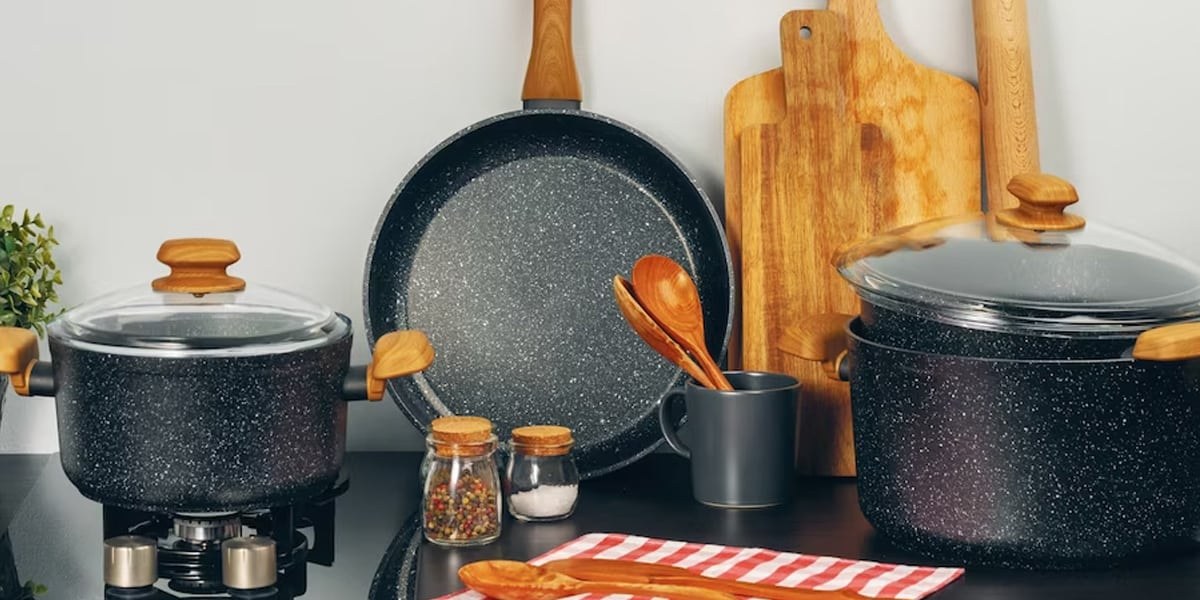
How to effectively remove grease from the inside and outside of cooking utensils:
The cooking utensils are essential tools in our kitchen, but with their continuous use, grease can remain both inside and outside them. The accumulation of grease can affect the performance of our utensils and reduce the quality of our cooking. Below, we will discuss effective ways that will help you remove grease from utensils, so you can continue to enjoy delicious and healthy meals.
Method 1: Cleaning with Dish Liquid
Fill the utensil with water and add a few drops of dish liquid. Place the utensil with the solution on the burner and let it simmer for 15-20 minutes. Then carefully empty the solution into the sink and remove the grease with a sponge. You will see that the grease comes off much easier. To get rid of stubborn grease, use a silicone, nylon, or wooden spatula.
Method 2: Cleaning with White Vinegar and Baking Soda
White vinegar and baking soda are widely known to have cleaning properties. It is precisely for these properties that we will use them on your cooking utensils to remove burnt grease. Add a little water to the utensil, just enough to cover the bottom, and to the existing water, pour a cup of white vinegar and bring it to a boil. Once it starts boiling, take it off the burner and add 2-3 tablespoons of baking soda. Let it act for about 15 minutes and then empty the solution. Finally, scrub the utensil with a sponge or a soft spatula and rinse with clean warm water. If the grease persists, repeat the process.
Method 3: Cleaning with Potato and Baking Soda
Yes, you read that right! A potato can be used to effectively remove grease from a cooking utensil. Cut a medium-sized potato in half and peel it. Then cover the cut side with baking soda. Rub the grease from your utensil, and you will see that it will slowly begin to disappear. Remember to cut off a small slice from the rubbing surface of the potato every time it blackens and apply baking soda again.
Method 4: Cleaning with Tea Bags
This method is preferable for cleaning the inside of pots from grease. With a dry tea bag, scrub the areas of the pot where there is grease. You will notice that the grease slowly dissolves. You may need more than one tea bag if your pot has a lot of grease, so opt for an inexpensive brand of tea.
Method 5: Cleaning with a Frying Pan
This method will help you free your frying pan from the grease on its outer surface. Place the frying pan that needs cleaning inside another larger frying pan, into which you have put a little water and 4-5 tablespoons of baking soda. Let the larger frying pan simmer for about 20 minutes while the smaller pan is inside it. Once the boiling is finished, you will see that you can easily remove the grease using a sponge. To follow this method, you must make sure that the bottom of your frying pan is suitable for such a process.
Alternative and ecological dish detergent for sparkling utensils and dishes.
More and more people are complaining about irritations caused to their hands by harsh dish detergents. That is why we will give you the recipe to create your own dish detergent with pure ingredients found in every home. The fact that it combines the astringent properties of salt with the disinfectant properties of vinegar and lemon will help you make your dishes and cooking utensils sparkle!
Take three lemons and cut them into small pieces with the peel. In a blender , add the lemon pieces, half a cup of salt, half a cup of vinegar, and one cup of water. Blend them on the high setting to create a liquid mixture. Then, boil the mixture for 10-15 minutes at medium temperature, stirring constantly while it boils. Next, pour the mixture into a container and let it cool. Do not worry if a crust forms. The ecological dish detergent is ready! Keep it in the refrigerator until it is finished. Now you will have healthy hands and clean dishes and utensils with an economical and easy solution!
To choose the ideal cooking utensils, consult the corresponding cooking utensil buying guide, while for the proper maintenance of various kitchen items, you will find a lot of useful information in the kitchen cleaning guide.
The information below is required for social login
Sign In
Create New Account